Jungle in a Box
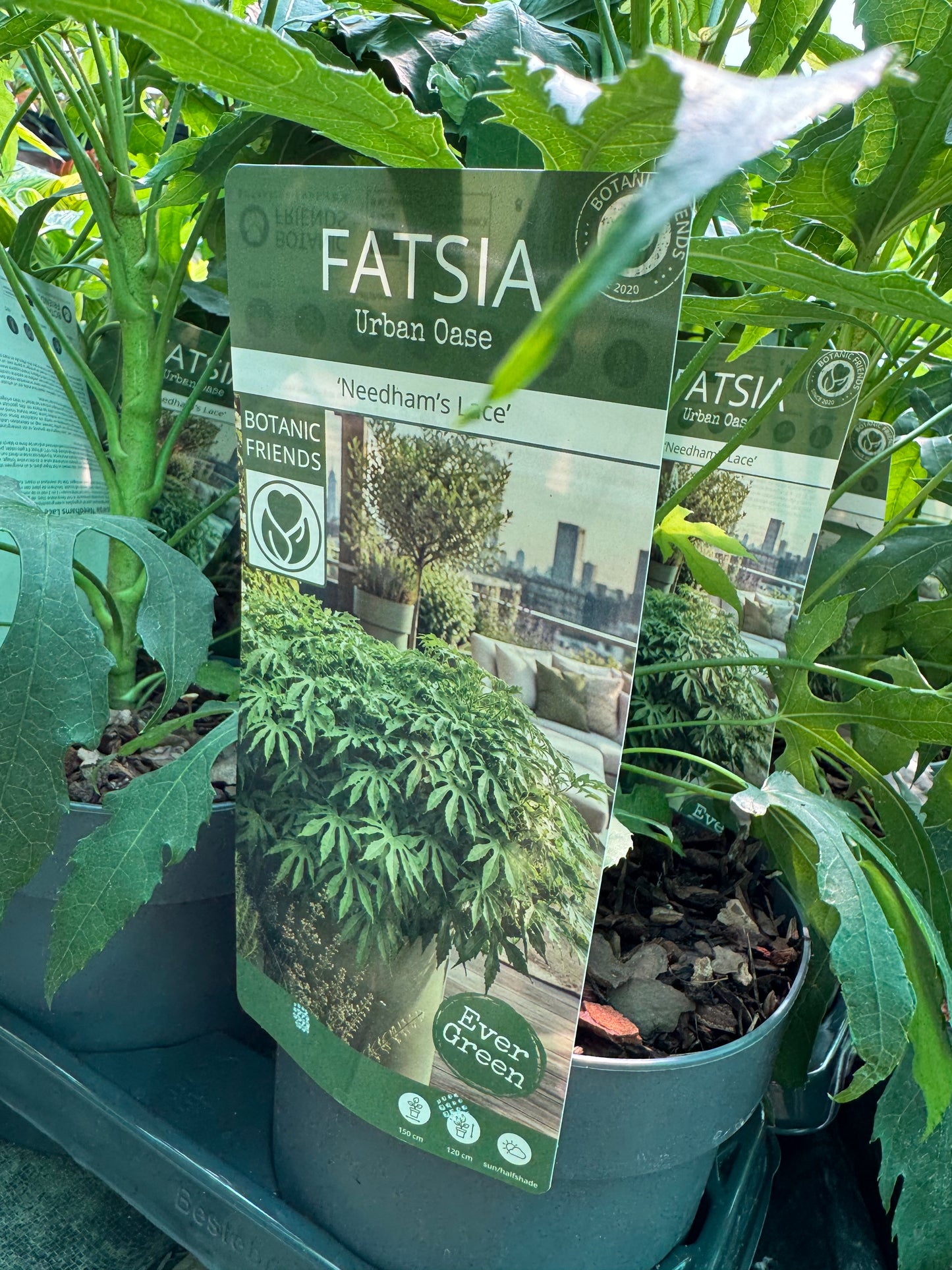
Fatsia polycarpa ‘Needhams’
Fatsia polycarpa ‘Needhams’
Fatsia polycarpa ‘Needhams’
If you want to inject instant, architectural drama into a shady spot, Fatsia polycarpa is already a heavyweight champion. But this particular form kicks the exotic factor up another notch. While the standard Fatsia japonica gives you big, bold, leathery paddles, polycarpa offers a much more refined, lace-like canopy. This ‘Needhams’ form is an absolute showstopper, boasting deeply divided, slender fingers that create an incredible textural contrast against chunkier broadleaf exotics like your Musa or Colocasia.
A Note on the Name
We source far and wide to bring the best genetics to the nursery, and this specific batch came to us from a Dutch wholesale supplier under the label ‘Needhams’ (a nod to the legendary Cornish plantsman Edward Needham). We’re always a little cautious when commercial European growers use highly specific cultivar names.
However, the plants physically back it up. Having assessed them on the nursery, the foliage is undeniably more deeply cut and the lobes are noticeably thinner than the standard Fatsia polycarpa ‘Green Fingers’. Whether this is a direct clone of Needham’s original collection or simply a spectacularly refined seed-grown form, it is an exceptional plant that more than earns its spot in the jungle.
Key Features:
-
Foliage: Evergreen, deeply lobed, matte-green palmate leaves with incredibly fine, slender "fingers".
-
Winter Interest: Produces spherical clusters of creamy-white, starburst-like flowers in late autumn to early winter, followed by black berries in the spring.
-
Structure: Naturally forms a statuesque, multi-stemmed architectural shrub over time.
Care & Cultivation:
-
Light: Thrives in dappled or partial shade. Too much direct, harsh sun can yellow the foliage.
-
Soil: Prefers rich, moist, but well-draining soil. Avoid letting the roots sit in heavy winter wet.
-
Shelter: This is crucial. While the plant is hardy for most of the UK once established, those stunning, delicate leaves will easily tear and burn in harsh, drying winds. Tuck it against a sheltered wall, under a tree canopy, or in a protected courtyard.
-
Hardiness: Hardy in a sheltered spot, though young plants may benefit from a bit of fleece protection during their first few severe frosts.
Couldn't load pickup availability
Share